
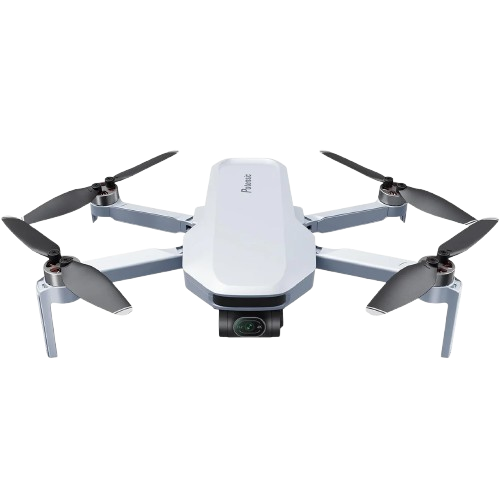

The rise of Unmanned Aerial Vehicles (UAVs) is not just a step forward in weapons technology, but a rupture in military doctrine on a global scale. For the first time in the history of human warfare, humans are being gradually removed from the front lines, making way for silicon platforms, optical sensors and algorithms. This article will comprehensively dissect the structure, tactics, economics and future of the era of unmanned warfare.
1. “System of Systems” Ecosystem
A common mistake when looking at UAVs is to focus only on the aircraft. In fact, the real power lies in the entire ecosystem that supports it, called the Unmanned Aircraft System (UAS).
Ground Control Station (GCS – Ground Control Station)
GCS is the command brain. For strategic UAVs like the MQ-9 Reaper, GCS are containers equipped with multi-stream displays, HOTAS (Hands On Throttle-And-Stick) joysticks and satellite communications systems, often located on a completely different continent from where the UAV is flying. This creates the concept of “remote warfare”, where a pilot can conduct airstrikes in the Middle East while sitting at a base in Nevada, USA.
[Illustration: Inside a Ground Control Station (GCS) with a crew of pilots and sensor operators staring at high-resolution infrared video displays.]
Data Links
The lifeblood of any UAV is communication waves. They use many different frequency bands:
-
Ku/Ka band: Used for broadband satellite communications (SATCOM), allowing live video transmission (Full Motion Video – FMV) at unlimited distances.
-
UHF/VHF band: Used for Line-of-Sight control, usually for short-range tactical UAVs.
Dependence on Data Links is also the Achilles heel of UAVs, opening up a completely new front: Electronic Warfare.
2. Intense Low-Level Races: FPV Drones and Electronic Warfare Network
If MALE/HALE UAVs represent state power, then FPV (First-Person View) Drones represent the power of frontline infantry. They are cheap, easy to produce and extremely dangerous.
Tactics for Using FPV Drones in Combat
Instead of using expensive and time-consuming artillery for positioning, infantry units now deploy FPV teams of 2-3 people: a main pilot wearing VR glasses, a person locating targets via digital maps, and a person preparing ammunition.
[Illustration: An FPV Drone fitted with a HEAT warhead is rushing straight into the turret of a main battle tank on the battlefield.]
Electronic Wall (EW)
To combat FPV, militaries are urgently equipping jamming systems. Methods of operation include:
-
GPS jamming (Spoofing/Jamming): Blinding the navigation system causes the UAV to lose direction.
3. The Problem of Asymmetric Economics
Modern UAV warfare is a war more about mathematics and financial logistics than pure firepower. It creates a profound economic paradox for defense forces.
Swarm Attack With a simple internal combustion engine, civilian off-the-shelf components (COTS) and delta wing design, production costs only range from 20,000 to 50,000 USD/unit.
When dozens of these cheap UAVs are launched at the same time, the enemy air defense system is pushed into a dilemma:
-
Shoot down: Must use interceptor missiles (like Patriot or NASAMS) that cost between 1 million and 4 million USD each. This is financial exhaustion.
-
Skip: Infrastructure targets (power plants, ammunition depots) worth tens of millions of dollars will be destroyed.
4. The Near Future: Artificial Intelligence (AI) and Autonomous Weapons of Destruction (LAWS)
The biggest limits of drone warfare today are “latency” and “human intervention”. When Electronic Warfare (EW) is so powerful that radio transmission becomes impossible, AI is the only answer.
Computer Vision Neural Network
Future UAV systems will not fly with human control. Instead:
-
They are loaded with a library of images of targets (enemy tanks, radar systems).
-
When the signal is completely lost due to interference, the onboard AI chip (Edge AI) will activate the optical camera, automatically scanning the ground.
-
When an object that matches the shape of an enemy tank is detected in the database, the UAV will automatically lock on the target and rush down to destroy it without any instructions from humans.
Autonomous Swarms
In the future, instead of controlling each aircraft, the commander only needs to issue a “Commander’s Intent” – for example: “Clear the air defense network in area A”. Swarms of hundreds of UAVs will automatically communicate with each other using laser signals (absolutely anti-interference), automatically assigning which one is the decoy, which one carries the sensor cluster for mapping, and which one carries the explosive warhead to finish off the target.
5. Cold Moral Lines
Machine autonomy presents humanity with an international legal and ethical conundrum: Who will be responsible for machine mistakes?
-
If an AI algorithm on a UAV mistakenly identifies a bus carrying civilians as a military vehicle, and automatically decides to open fire, whose responsibility is it?
-
Is allowing an algorithm to decide whether to take human life a violation of the Geneva Conventions?
Although international organizations are making efforts to call for a ban on Lethal Autonomous Weapons Systems (LAWS), the pressure of the arms race and the absolute superiority of AI’s processing speed compared to the human brain makes their application on the battlefield only a matter of time. The sky of future wars will be a silent and cruel symphony of algorithms and mindless mechanical systems.